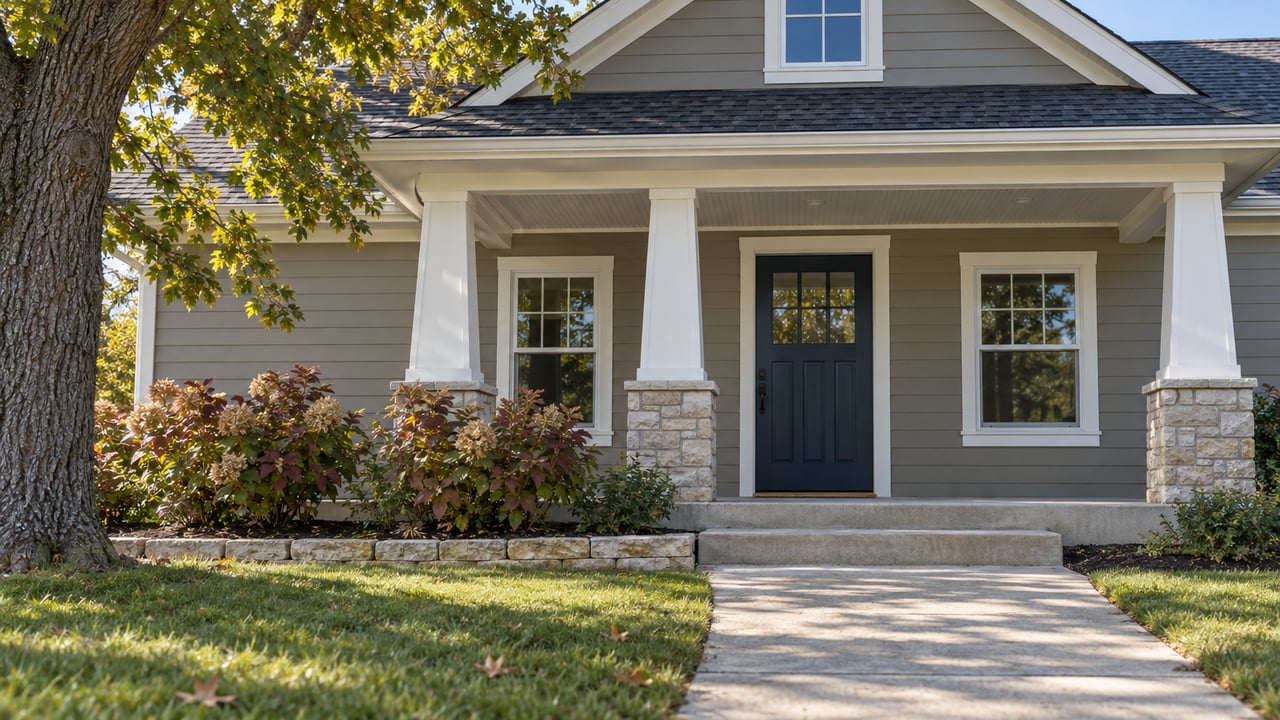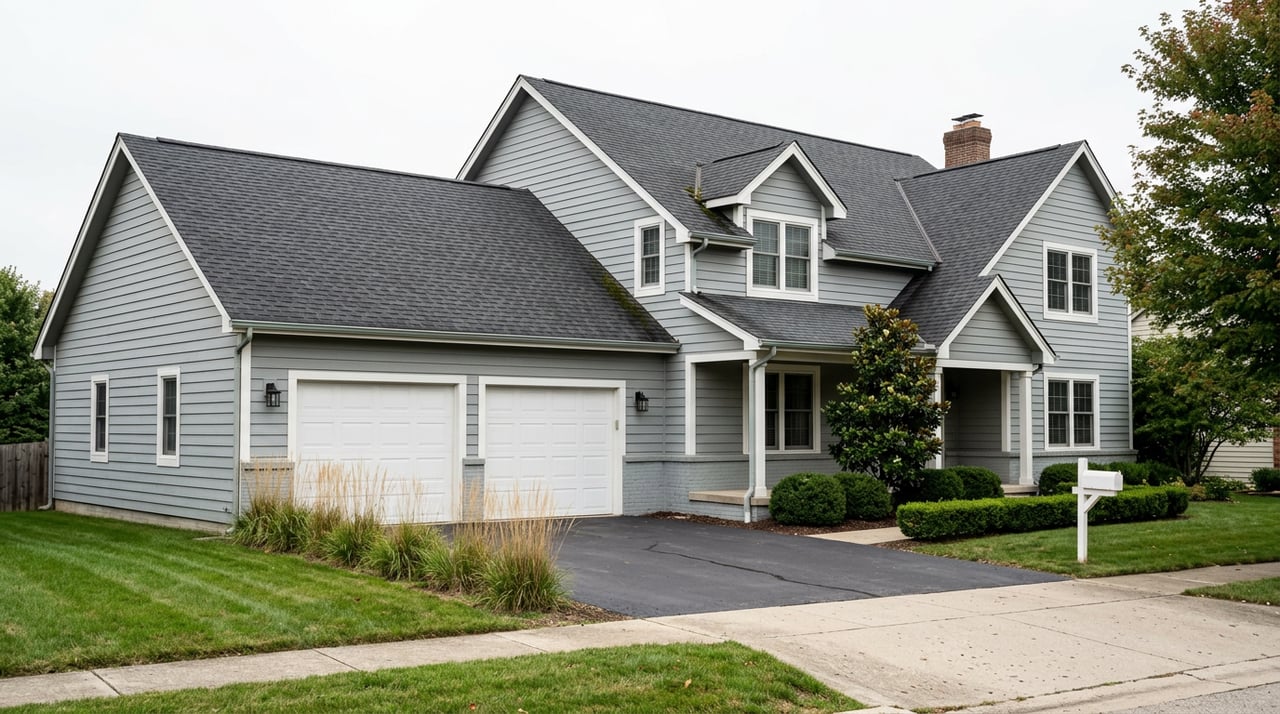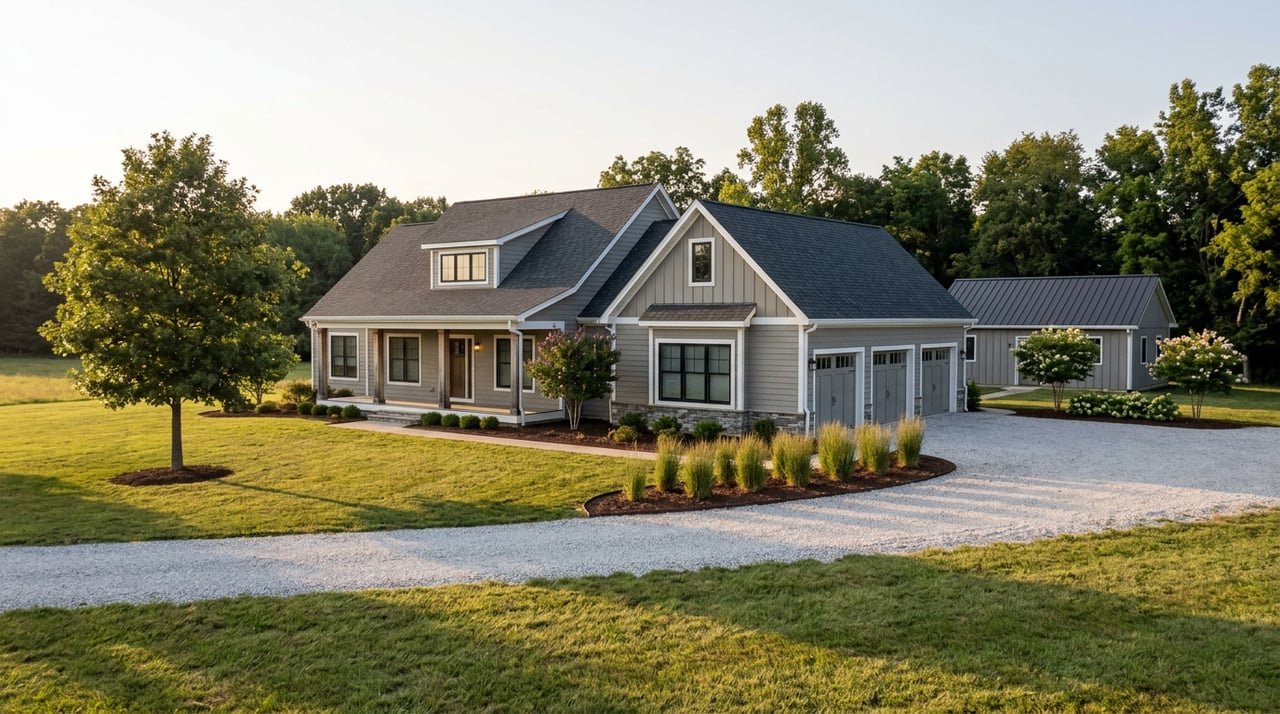
Picture two buyers this fall, each with an offer accepted on a comparable ten-acre parcel off Route K outside Pineville. Same rolling pasture, same tree line, same age of septic tank buried somewhere near the back fence. One buyer is financing with a conventional loan. The other is using a USDA Rural Development loan. By the time they reach the closing table, one of them has ordered a water test, a septic evaluation, and possibly a flow test on the well. The other one hasn't ordered any of it, because nothing required it.
The tank didn't change between those two closings. The loan did.
That distinction gets lost in most rural home-buying guides, which tend to treat wells and septic systems as a single universal checklist. Around Pineville, where acreage listings routinely run from a few wooded acres off Big Sugar Creek to full sections tucked against the Huckleberry Ridge Conservation Area, almost none of that acreage sits on city water or sewer. The systems themselves are not the variable. The mortgage is.
The Same Tank, Two Different Closings
Conventional loans are the most forgiving. A lender will usually accept a well and septic system as-is unless an appraiser flags something visible, like standing water where a drain field should be dry. No test, no evaluation, no delay.
Government-backed loans work differently, because HUD, the VA, and the USDA all write specific, numeric standards into their guidelines. Here's how the four common paths actually compare:
| Loan type | Water test required | Septic inspection required | Distance and flow rules |
|---|---|---|---|
| Conventional | Only if a red flag appears | Only if a red flag appears | None specified, unless local hazard exists |
| FHA | Yes, tested for coliform bacteria, nitrates, nitrites, and lead | Yes, local health authority approval if needed | Well at least 50 feet from the septic tank, 75 to 100 feet from the drain field, and about 10 feet from the property line; minimum sustained flow around 3 gallons per minute |
| VA | Yes, coliform bacteria at minimum, valid roughly 90 days | Only if appraiser notes a concern or local rule requires one | Same safety and sanitation standard as FHA, evaluated case by case |
| USDA | Yes, required on nearly every property with a private well | Generally required alongside the water test | Follows FHA-style guidelines |
A buyer who assumes their financing works like everyone else's can end up ordering tests two weeks later than they should have, which is exactly the kind of delay that pushes a closing date.
McDonald County Still Runs Its Own Rulebook
Federal loan rules are only half of what governs a septic system near Pineville. The other half comes from McDonald County itself. The county adopted its own septic regulations back in 1996, and every new system or repair still requires a permit issued directly through the McDonald County Health Department. That's a local layer state guidance doesn't always match exactly, since Missouri counties are allowed to write stricter standards than the statewide minimum.
The same health department also keeps well-water test kits on hand for residents, checking for bacteria and mineral content. That's a resource many buyers never think to ask about until they're already stressed about a failed test result. It's worth a call before you're under contract, not after.
What a Flag on the Inspection Actually Costs
Most of what shows up on a well or septic inspection is cheap to fix. A well inspection near Pineville typically runs somewhere between $250 and $550, a septic evaluation runs $300 to $550, and most inspectors bundle the two for around $400 to $650 when a property has both, which most acreage here does.
The failures that actually turn up are usually minor. Coliform bacteria in a well is common and usually resolved with shock chlorination and a retest. High nitrates near older farmland can require a treatment system rather than a full well replacement. A well that can't sustain the government-required 3 gallons per minute during a flow test is a bigger problem, but it's still a fixable one in most cases.
The expensive failure is a saturated or surfacing drain field, since that's the part of a septic system that costs the most to replace. It's also the one most likely to actually stall a government-backed loan, because none of the federal programs will close on a system with visible signs of failure.
None of this means walk away. A well-maintained conventional septic system commonly lasts 20 to 30 years, and age by itself isn't evidence of a problem.
Why That Flag Is Leverage Right Now, Not a Dealbreaker
Here's the part that actually matters for anyone buying or selling acreage near Pineville this fall.
As of June 2026, homes in Pineville were sitting on the market for a median of 123 days, unchanged from the year before, while price per square foot had dropped about 8 percent year over year. The median list price sat around $349,000. Land listings around the area have recently priced out somewhere between $24,000 and $37,000 per acre depending on location and road access.
That's a slow market. And in a slow market, a flagged inspection isn't the reason a deal falls apart. It's the reason a buyer asks for a credit instead of walking. Sellers sitting on acreage for four months at a time don't have the leverage to refuse a reasonable ask for a septic repair credit, and buyers who understand that going in are in a far stronger negotiating position than buyers who panic at the sight of a septic report.
This is also where loan type comes back around. A USDA or FHA buyer who orders their tests early, before the appraisal deadline creates pressure, can use a slow market to their advantage. A conventional buyer who skips testing entirely might be buying blind on something a government-backed buyer would have caught. Either way, understanding which rules actually apply to your financing changes how you negotiate, not just how you close.
Before You Write the Offer
A few habits keep this from turning into a late surprise.
- Confirm your loan type and ask your lender exactly which water panel and which distance standards apply before you order anything.
- Call the McDonald County Health Department early if the property has an existing system, since local permitting can take longer than a lender's timeline assumes.
- Ask whether the property shares a well with a neighboring parcel. Shared wells are workable, but only with a recorded agreement covering maintenance and access. Government loans will not close on a handshake arrangement.
- If the property uses a lagoon system instead of a conventional tank, know that it's a normal, legal option in parts of the Ozarks where soil drains poorly. It just needs to be properly sized, fenced, and maintained.
- Get any test results and reports into your lender's file early, since it's far easier to clear a condition in one pass than to keep resubmitting paperwork against a closing deadline.
A Few Questions We Hear Often
Does a lagoon system hurt resale near Pineville? Not on its own. Lagoons are a normal, legal wastewater option in parts of the Ozarks where soil conditions don't drain well, and buyers unfamiliar with them just need a straightforward explanation, not a reason to worry.
What if the well serves more than one house? That's common on larger acreage tracts that were once subdivided from a single parcel. It's workable as long as there's a recorded shared-well agreement spelling out maintenance responsibilities and access rights. Government-backed loans require that documentation before closing.
Is a septic system that's 20 years old automatically a problem? No. A well-maintained conventional system commonly lasts two to three decades. Age alone isn't failure. The inspection is what tells you whether the system is actually working, not the calendar.
Buying or selling acreage near Pineville comes with more moving parts than a typical in-town closing, and the loan you pick changes more about that process than most buyers expect walking in. If you're weighing a parcel off Route K, Route E, or anywhere near the Huckleberry Ridge Conservation Area and want a straight answer about what your financing actually requires before you write an offer, the team at Ginger Kitchen is happy to walk through it with you. Schedule a free consultation and let's get the details right before they become a problem on closing day.